SOURCES–
- ABHISHEK TIWARI VLOGS –https://youtu.be/QUc5Yqf-wM0?s
- EXAUTO 22- https://youtu.be/sEpMm4Zu6QU?
2026 Mahindra Thar RWD Diesel Mileage Test:12.0 KM/L Tank to Tank
TEST (A)
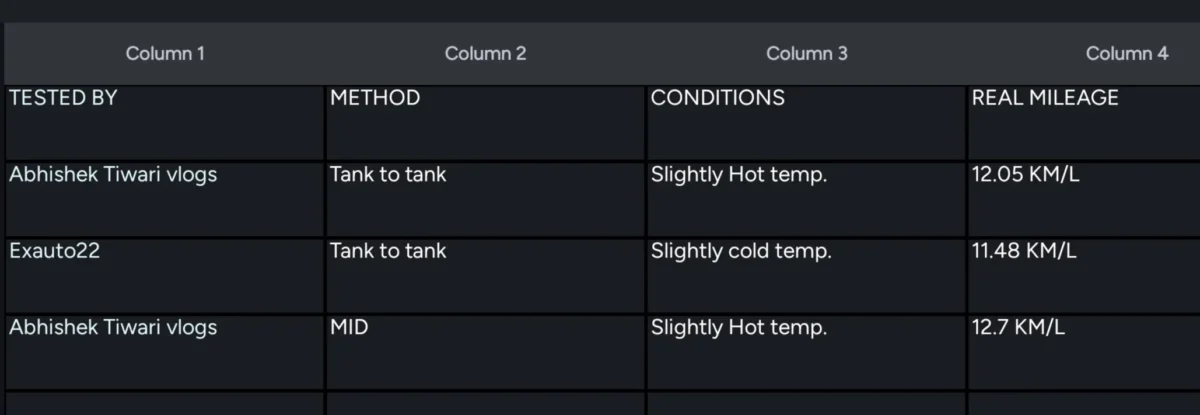
According to a highway mileage test conducted by YouTube creator @AbhishekTiwarivlog on 11 May 2026, the 2026 Mahindra Thar RWD (4×2) Diesel delivered a real-world fuel efficiency of 12.0 KM/L.
During the test, the vehicle was driven on the highway at an average speed of 80–90 km/h with 4 occupants on board. The Thar covered a total distance of 102 km and consumed 8.46 litres of diesel. Based on the fuel used and distance covered, the tank-to-tank mileage worked out to approximately 12.0 KM/L.
However, the tank-to-tank method is generally considered more accurate as it is based on actual fuel consumption rather than the vehicle’s onboard estimate.
TEST HIGHLIGHTS
- Vehicle Tested: 2026 Mahindra Thar RWD Diesel (4×2)
- Test Date: 11 May 2026
- Tested By: YouTube creator @AbhishekTiwarivlog
- Mileage Achieved: 12.0 KM/L (tank-to-tank)
- Distance Covered: 102 km
- Diesel Consumed: 8.46 litres of diesel
- Driving Conditions: Highway drive
- Average Speed: 80–90 km/h
- Occupants: 4 persons on board
- Mileage Calculation: 102 km ÷ 8.46 L = approximately 12.0 KM/L
TEST (B)
2026 Mahindra Thar RWD Diesel Mileage Test: 11.48 KM/L
A highway mileage test of the 2026 Mahindra Thar RWD Diesel was conducted by YouTuber @Exauto22 on 2 March 2026. The journey covered a long-distance route from Bangalore to Hyderabad, including both day and night driving conditions.
During the test, the Thar RWD covered a total distance of 532 km and consumed 37.61 litres of diesel. Based on the tank-to-tank calculation method, the SUV delivered a fuel efficiency of 11.48 km/l.
The number of occupants and air-conditioner usage during the journey were not mentioned by the creator. As a result, these factors cannot be considered while evaluating the mileage result.
TEST HIGHLIGHTS
- Route: Bangalore to Hyderabad
- Distance Covered: 532 km
- Diesel Consumed: 37.61 litres
- Mileage Achieved: 11.48 km/l
- Test Date: 2 March 2026
- Driving Conditions: Day + Night Highway Drive
- Vehicle – Mahindra Thar RWD 4×2 Diesel Manual
The Mahindra Thar RWD Diesel returned 11.48 km/l in this real-world highway test. Since passenger load and AC usage details were not provided, actual mileage may vary depending on driving style, traffic conditions, and vehicle load.
2026 Mahindra Thar RWD Diesel Mileage Test with diesel: 12.7 KM/L MID
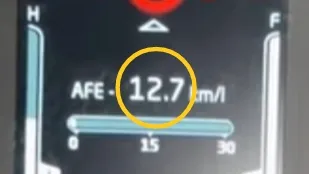
The 2026 Mahindra Thar RWD Diesel delivered an average mileage of 12.7 km/l during a highway drive. The vehicle was driven with 4 occupants on board and covered the journey during both day and night conditions.
The driver maintained an average speed of 80-90 kmph, which reflects typical highway cruising. Despite carrying four people, the Thar RWD managed a mileage figure of 12.7 km/l, making it a decent result for a body-on-frame SUV focused on performance and road presence rather than fuel efficiency.
KEY HIGHLIGHTS
- Mileage: 12.7 km/l
- Fuel Type: Diesel
- Variant: Mahindra Thar RWD 4×2 Diesel Manual
- Passengers: 4
- Driving Conditions: Highway (Day + Night)
- Average Speed: 80-90 kmph
2026 Mahindra Thar RWD Diesel Mileage Test ARAI vs Real world
The 2026 Mahindra Thar RWD Diesel comes with an ARAI-certified mileage of 15.2 km/l, but how close does it get in real-world conditions?
To find out, we compared two independent highway mileage tests conducted by different YouTube creators. In Test A, the Thar RWD Diesel delivered 12.0 km/l in a tank-to-tank test. In Test B, another creator achieved 11.48 km/l using the same tank-to-tank method.
Both results are lower than the official ARAI figure, which is expected because ARAI testing is conducted under controlled conditions. In real-world driving, factors such as traffic, road conditions, driving style, vehicle load, and AC usage can have a significant impact on fuel efficiency.
Why MID Mileage Is Higher Than Tank-to-Tank Mileage
The 2026 Mahindra Thar RWD Diesel has an ARAI-certified fuel efficiency of 15.2 km/l, but real-world highway tests have returned lower figures. In Test A, the vehicle delivered around 12.0 km/l, while in Test B the mileage dropped to 11.48 km/l. Many readers also notice that the MID (Multi Information Display) mileage is often higher than the actual tank-to-tank mileage. Here are the main reasons behind this difference.
MID Mileage Is Only an Estimate
The MID calculates fuel efficiency using data from the vehicle’s sensors and ECU. It estimates fuel consumption in real time, but it cannot measure the exact amount of fuel filled into or consumed from the tank. As a result, MID mileage is usually slightly optimistic compared to the tank-to-tank method, which is considered more accurate.
High Speed Reduces Fuel Efficiency
One of the biggest reasons for the lower mileage in Test B was speed. The Thar was driven at an average speed of 140–160 km/h, which significantly increases aerodynamic drag and engine load. At such speeds, fuel consumption rises sharply, leading to lower mileage.
In contrast, Test A was conducted at a more efficient cruising speed of 80–90 km/h, helping the vehicle achieve better fuel economy.
ARAI Testing Conditions Are Different
The ARAI mileage figure of 15.2 km/l is obtained under controlled laboratory conditions. These tests are conducted on a dynamometer with fixed driving cycles, ideal temperatures, and no traffic or road resistance.
Real-world driving involves factors such as:
Highway gradients
Wind resistance
Traffic conditions
Vehicle load
Driver behavior
Air-conditioner usage
Because of these variables, actual mileage is usually lower than the ARAI claim.
Passenger Load Affects Mileage
Test A was conducted with four occupants on board. Additional weight forces the engine to work harder, increasing fuel consumption. Even though the vehicle still managed around 12.0 km/l, the mileage could have been slightly higher with fewer passengers.
Weather Conditions Also Matter
Test A took place in May, when temperatures are generally higher. Hot weather often leads to increased air-conditioner usage, which can slightly reduce fuel efficiency.
Test B was conducted in March when temperatures were comparatively cooler. However, the benefit of cooler weather was outweighed by the extremely high cruising speeds, resulting in lower mileage.
TATA NEXON MILEAGE